Secured vs Unsecured Business Funding: Which One Should You Choose?
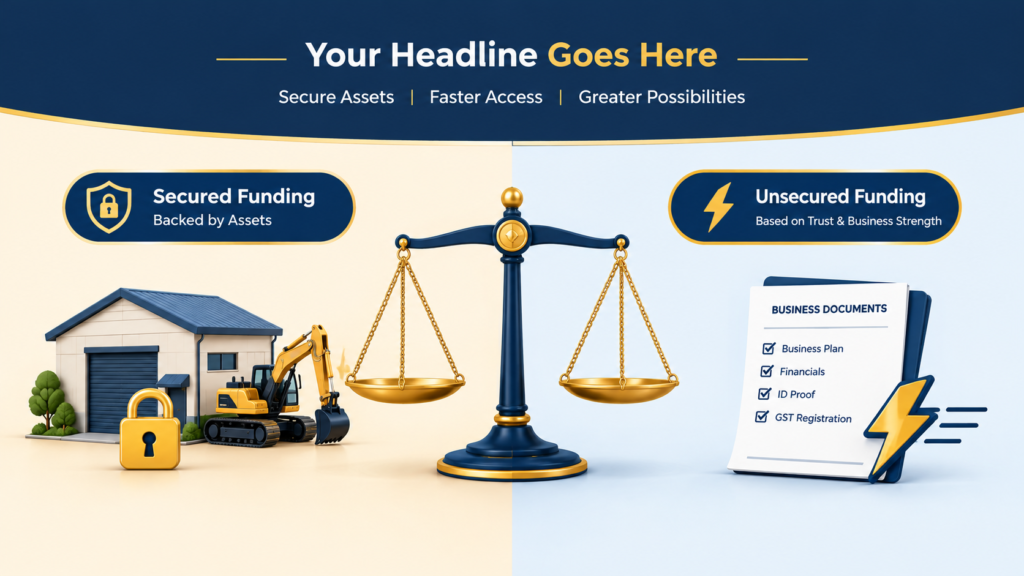
A secured business loan needs collateral such as property, machinery or fixed deposits, and usually costs less. An unsecured business loan needs no collateral, but it costs more and carries lower limits. Choose secured funding for large, long-term needs. Choose unsecured funding when you need speed or have no assets to pledge.
For shop owners in Mysuru, manufacturers in Hootagalli, traders in Devaraja Market, and growing firms in Mandya, Hassan and Bengaluru, this choice shapes your cash flow for years. The wrong loan type can drain working capital or put your property at risk. The right one funds growth without stress.
What is the real difference between secured and unsecured funding?
The difference comes down to who carries the risk.
With a secured loan, you pledge an asset. If you default, the lender can recover its money by selling that asset. Because the lender’s risk is lower, it offers a lower interest rate, a higher loan amount and a longer tenure.
With an unsecured loan, you pledge nothing. The lender judges you on your credit score, business vintage, turnover and banking record. Because the lender’s risk is higher, you pay a higher interest rate, get a smaller limit and repay over a shorter period.
Factor
Secured Loan
Unsecured Loan
Collateral
Required (property, machinery, FD)
Not required
Interest rate
Lower
Higher
Loan amount
Higher
Lower
Tenure
Longer
Shorter
Approval time
Slower (valuation, legal checks)
Faster
Risk to you
Asset can be seized on default
Credit score and reputation take the hit
Secured business funding: when it makes sense
Secured loans suit big, planned investments. Think of buying a factory shed, installing new machinery, or expanding your premises.
Common types of secured funding
Loan against property (mortgage loan): Pledge residential or commercial property for a large amount at a lower rate.
Machinery or equipment loan: The asset you buy becomes the security.
Overdraft or cash credit against stock, receivables or FDs: Useful for day-to-day working capital.
Gold or deposit-backed loans: Quick and cheap for smaller needs.
The catch
You can lose the pledged asset if repayments fail. The process also takes longer because of property valuation, title checks and legal paperwork. If your property is already mortgaged or has unclear title, approval can stall.
Unsecured business funding: when it makes sense
Unsecured loans suit speed and flexibility. They work well for working capital, seasonal stock, urgent supplier payments or a small expansion.
Common types of unsecured funding
Unsecured term loans from banks and NBFCs: Fixed amount, fixed EMI, no collateral.
Business lines of credit: Draw what you need and pay interest only on that.
Government-backed collateral-free loans: Under the CGTMSE scheme, eligible micro and small enterprises can borrow without pledging security. One 2026 industry source reports the guarantee ceiling was doubled from ₹5 crore to ₹10 crore in February 2026. Confirm the current limit with your lender before you plan around it.
Invoice financing and supply-chain finance: Convert unpaid invoices into cash.
The catch
Unsecured money costs more. Lenders also look hard at your CIBIL score, bank statements, GST returns and income tax filings. A thin or messy paper trail means a smaller offer or a rejection.
How to choose: a five-step decision framework
Run your business through these five checks.
Define the purpose. Buying a long-life asset? Lean secured. Covering a short cash gap? Lean unsecured.
Check the amount. Small and medium needs often fit unsecured limits. Large amounts usually need collateral.
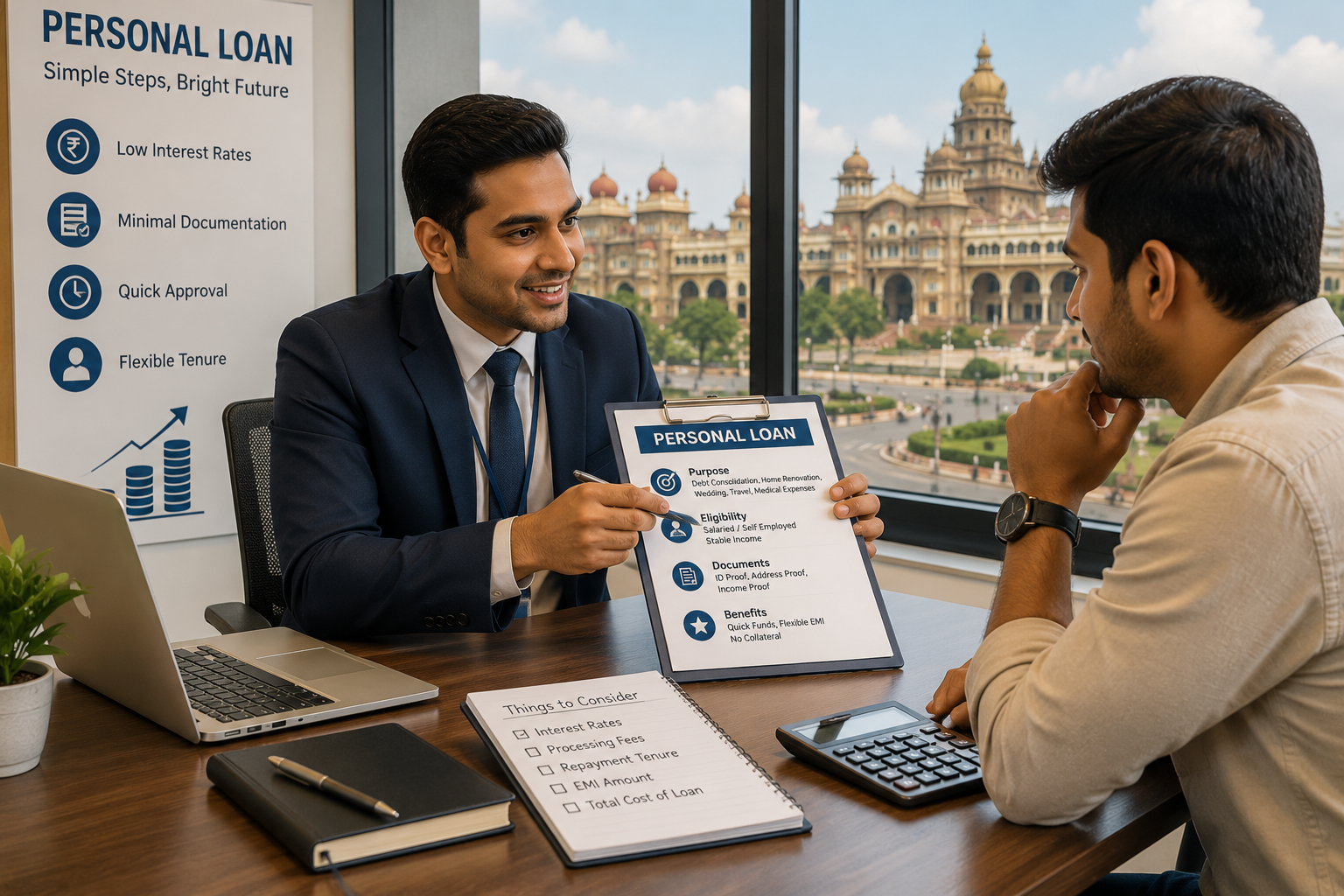
Count the cost. Compare the total interest paid over the full tenure, not just the monthly EMI. Add processing fees, prepayment charges and guarantee fees.
Weigh the risk. Ask yourself: if sales fall for six months, can I still repay? If not, avoid pledging your home or shop.
Look at your paperwork. Clean GST filings, audited accounts and a healthy credit score unlock better rates on both loan types. A simple rule of thumb: match the loan tenure to the life of what you are funding. Use long, secured loans for long-life assets. Use short, unsecured loans for short-term needs.
Why your financial records decide your offer
Lenders in Karnataka approve loans on evidence. They want to see consistent turnover, timely GST returns, filed income tax returns and tidy books. Businesses that keep these in order get faster approvals and lower rates. Businesses that scramble for documents lose time and often lose the deal.
This is why funding is never only a loan question. It is an accounting and compliance question too.
How PM Associates approaches business funding in Mysuru
PM Associates is a multidisciplinary firm of accounting, taxation, audit and financial professionals based in Chamundipuram, Mysuru. We look at funding as part of your full financial picture, not as a stand-alone product.
Here is how we work:
We start with your numbers. We review your books, turnover and credit position to see what you can realistically borrow and repay.
We match the loan to the need. Whether you need a “business loan in Mysore” for working capital or a “mortgage loan” for a larger investment, we compare options across lenders.
We support the business structure. If you are still unregistered, our team can guide you through “company registration” so lenders see a formal, credible borrower.
Questions to ask before you take any business loan
What is the total cost of the loan, including processing fees, insurance and prepayment charges?
Is the interest rate fixed or floating, and how often can it change?
What exactly happens to my collateral if I miss a payment?
Can I prepay or part-pay without a penalty?
Does this loan come with a CGTMSE guarantee, and who pays the guarantee fee?
Will this EMI still be comfortable if my sales drop by 20%?
1. What is the main difference between secured and unsecured business loans?
Secured loans need collateral; unsecured loans do not. In return for taking on less risk, lenders charge lower interest on secured loans and offer larger amounts.
2. Can a new business get an unsecured loan in Mysuru?
Yes, but options are limited. New businesses can try CGTMSE-backed loans through participating banks, or smaller NBFC loans. Expect higher rates and lower limits until you build a track record and credit history.
3. Are unsecured business loans always more expensive?
Usually yes. The lender takes more risk, so the interest rate is higher. A strong credit score and clean financials can narrow the gap noticeably.
4.What documents do I need for a business loan?
Lenders typically ask for KYC, bank statements, GST and income tax returns, financial statements and business registration proof. Secured loans also need property or asset documents for valuation.
5.Should I use my home as collateral for my business?
Only if you are confident you can repay even in a weak year. Pledging your home exposes your family to risk. Consider a CGTMSE-backed or smaller unsecured option first, and speak with a financial advisor.